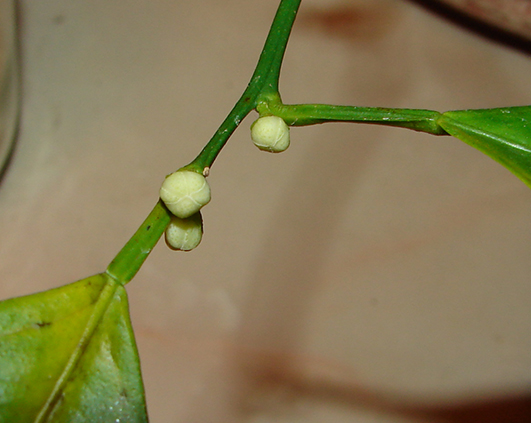
Mandarin (Citrus reticulata) is a small citrus tree or shrub, rounded, usually thorny, evergreen that produces fruits resembling to oranges. The fruit is oblate rather than spherical. Reddish-orange mandarin cultivar is a variety of the mandarin and is known as tangerine (Citrus × tangerina). Tangerines are smaller than most oranges and the skin of some varieties will peel off more easily. Their taste is often less sour or tart than that of an orange. A popular alternative to tangerines are clementines, which are also a variety of the mandarins. They are also very easy to peel but are almost always seedless. Clementines are also known as seedless tangerines.

The mandarin tree is tender and is easily damaged by cold. It can be grown in tropical and subtropical areas outdoors and in colder areas it may be grown as a houseplant. It needs a warm climate and a sunny exposure from the south or west. The shelter of a fence or patio is ideal for the mandarin tree. It will grow well in sandy, neutral, well-drained soils. Avoid wet poorly drained soils.
If grown in a container as a houseplant, use an all purpose, well-drained potting mix for planting this tree. You can make your own mix for planting: 1 part garden soil, 1 part coarse sand or perlite, 1 part moist peat or humus (leaf mold) and a light dusting of lime. Take the container outdoors in late spring and place it in a place with full sun and protected from winds. Bring container back inside in fall for overwintering and place it in a cool but bright sunny southern window. Indoor plants may produce some fruit from autumn to spring.
Water the mandarin trees regularly and for those grown indoors, in winter mist them with water almost daily or use a humidifier. The young mandarin trees need to be watered often, but as the trees are disposed to root rot allow them to dry after each watering. The older mandarin orange trees can live with just rainfall if grown outdoors. Prune the trees in spring. Feed every two weeks with a water soluble fertilizer. Do not fertilize in the winter. As an alternative use a granular slow release fertilizer applied annually in the early spring.
Propagate from stem cuttings with heel or from seeds in the summer. Use a mixture of moist peat and perlite. Cover the pot and plant with a plastic bag or use a propagator to prevent the moisture loss. Place the pot in indirect sunlight or under a fluorescent light. Repot the plant in a regular potting mix after it has been growing for a while.